Reading a US gambling map from the Canadian side of the border
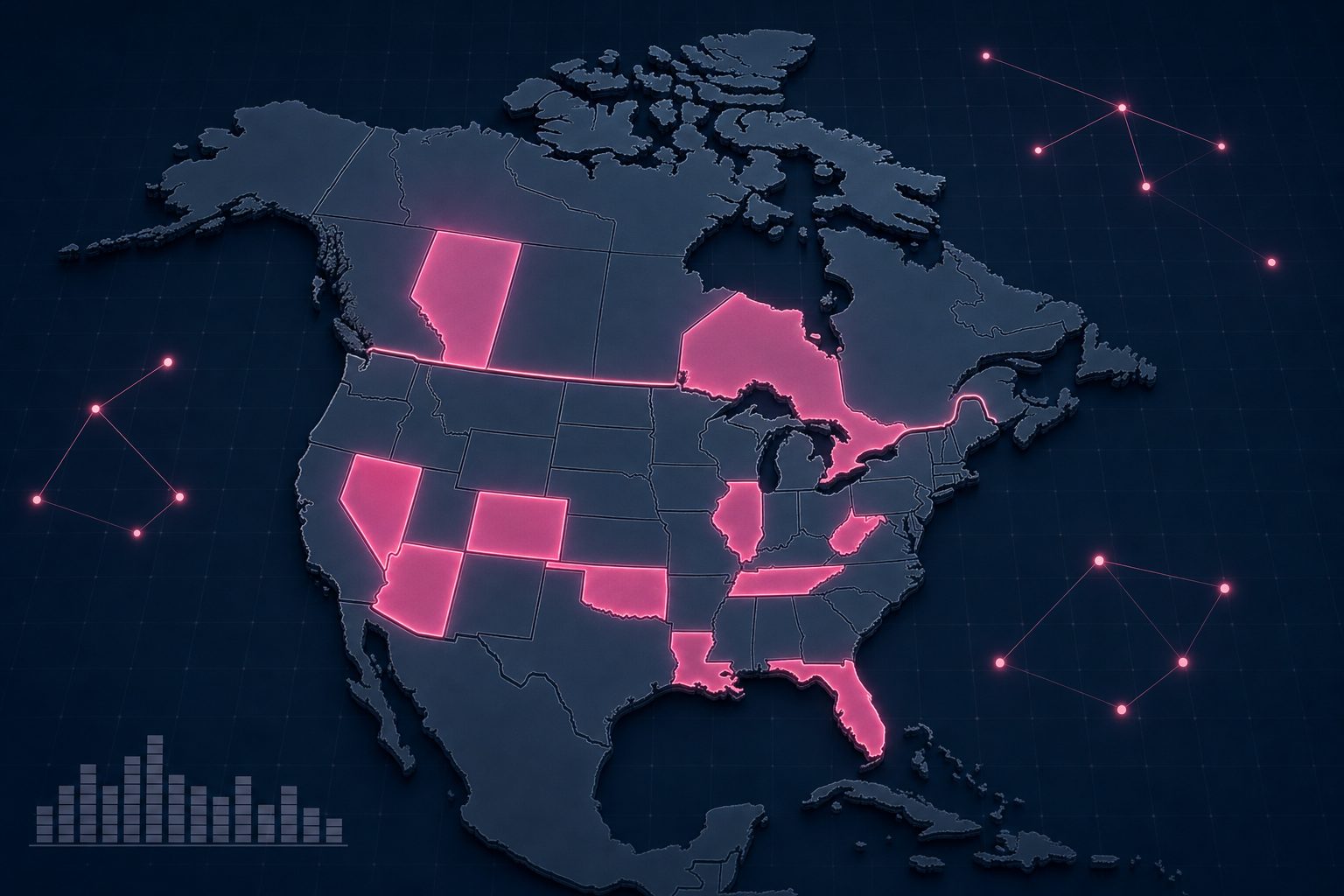
Seen from Windsor, Niagara Falls or Vancouver, the United States can look like one enormous gambling market. It is closer to fifty small ones. A casino app that works in Detroit goes dark a few hours south in Ohio, and a sportsbook that is legal in New York cannot take a casino bet there. For Canadian readers trying to make sense of our online casinos by state board, the first step is to stop looking for a national rule, because there isn’t one.
Why the American map is a patchwork
Gambling law in the US is written mostly by the states. Federal law sets a few outer limits, such as the Wire Act and the 2006 statute that restricts payment processing for unlawful online betting, but it does not say who may open a casino or run a betting app. Each legislature answers that for itself. When the Supreme Court struck down the federal ban on sports betting in 2018, it did not legalize anything. It handed the question back to the states, and most of them have since said yes to sports betting in some form.
Online casinos have moved far more slowly. As of late 2026, seven states license real-money online casino play: New Jersey, Pennsylvania, Michigan, West Virginia, Connecticut, Delaware and Rhode Island. No two of them are built alike. Delaware and Rhode Island run theirs through the state lottery, while New Jersey, Pennsylvania and Michigan license competing commercial brands. Tribal gaming adds another layer, since tribes negotiate compacts with their states under a separate federal framework. In much of the rest of the country the gap is filled by sweepstakes casinos, which run on a prize-promotion model and which several states have moved to restrict.
How Canada divides the same question
Canada starts from the opposite direction. Gambling is prohibited by the federal Criminal Code, and section 207 then carves out an exception that lets a provincial government “conduct and manage” lottery schemes within its own borders. That phrase is why every legal gambling product in the country traces back to a province. Most provinces use it to run a single website through their lottery corporation. Ontario, since April 2022, and Alberta, since July 2026, use it differently: a provincial agency holds the market, and private operators register to offer games under contract with it. Single-event sports betting followed the same route when Parliament lifted the federal restriction in 2021 and left the rollout to each province. Our province-by-province breakdown covers who regulates what.
Why best gambling sites Canada lists vary by province
The practical effect is that no single list of sites holds true across the country. An operator registered in Ontario is not thereby available in Manitoba, and the only locally authorized online casino in Quebec is the one the province runs itself. National roundups have to work around this. A recent example is the Ottawa Citizen's look at Canada, published as sponsored content, which pairs its site reviews with a section on whether online gambling is legal in the country at all. Pieces like that are a starting point for a reader, not a license check. Whether a given site is regulated where you live is a question only your provincial regulator’s own list can settle.
What carries across the border
Location decides everything. Both countries apply the rules of the place where the player is physically standing, checked by geolocation, so a Canadian visiting Michigan plays under Michigan law and loses access on the drive home. An account opened in one jurisdiction does not travel either. Crossing from New Jersey into Pennsylvania means registering again, and the same generally holds between Ontario and Alberta.
Ages differ. Most US states set 21 as the minimum for casino play, while Ontario uses 19 and Alberta 18, so a 19-year-old who can play legally in Toronto cannot do so in Detroit.
The label matters less than the license. “Legal”, “regulated” and “available” are three different claims on either side of the border, and only the second means a local regulator is answerable for the site. Keeping the US side of that record straight is what this board is for.